
Assembly
UI/UX DESIGN
BRANDING
Time: 8 weeks
Role: UI/UX Designer
Team: Ria Thompson, Erica Kuen, Cole Biehle
Assembly is an app that connects students to campus events & activities based on their preferences.
The challenge —
Create a product that addresses social connectivity between students in the advent of the pandemic and lack of on-campus affairs.
The outcome —
A mobile app that allows users to edit their preferences and be presented with a custom feed of events.
1/ Objective
— Conduct primary and secondary research to understand users' needs.
— Develop a branding guideline and a design system.
— Created and iterated on high-fidelity prototypes
2/ Research
Design process —

— As students ourselves, we have first-handedly experienced the shift to the virtual environment that led to a sense of disconnection to university life. Therefore, we wanted to more research to understand the problem space.
Secondary research: Reddit—
We turned to popular social media platforms, such as Facebook groups and Reddit forums, to look at people's behaviors in their university social lives, and found a large amount of organic content from Reddit.
— Many expressed a feeling of disconnection in the new all-virtual environment. We saw a rise in posts asking for a study buddy or expressing their desolation.
— This lack of connection led to a decrease in motivation for school work and an increase in online resources such as Discord. However, these resources take efforts to form a connection.

User Research —
We collected data by sending out a survey (with 32 responses) and conducting interviews with stakeholders, who are students enrolled in a 4-year college (7 students).
— Events involvement decreased in general
— All 7 interviewees felt that their universities were doing the best, but did agree that communications can be improved.

Persona —

Steve, a 2nd-year student at UCSD
— Was very involved with campus life (Greek,
sports, etc)
— Likes trying new things and meeting people from classes and events.
Pain points
— Hard to coordinate activities with friends because of mismatching schedule.
— Little to no interaction with the water polo team and his fraternity.
Opportunities
— More flexible with his time due to online classes
— Has the opportunity to focus more on his personal interests and hobbies
Problem Statement —
With all of this in mind, based on our research, interviews, and observations, we planned on creating a social platform that gives easy access to students to feel more connected to their university through clubs and organizations.
How might we improve communications to promote on-campus involvement during the pandemic?
3/ Iterations & Prototypes
Wireframes & Sketches —
— Our user flow to map out how users would interact

TA's Feedback:
— Lacking novelty to engage users long-term -> Proposed an idea that was in backlog to be included in usability testing.

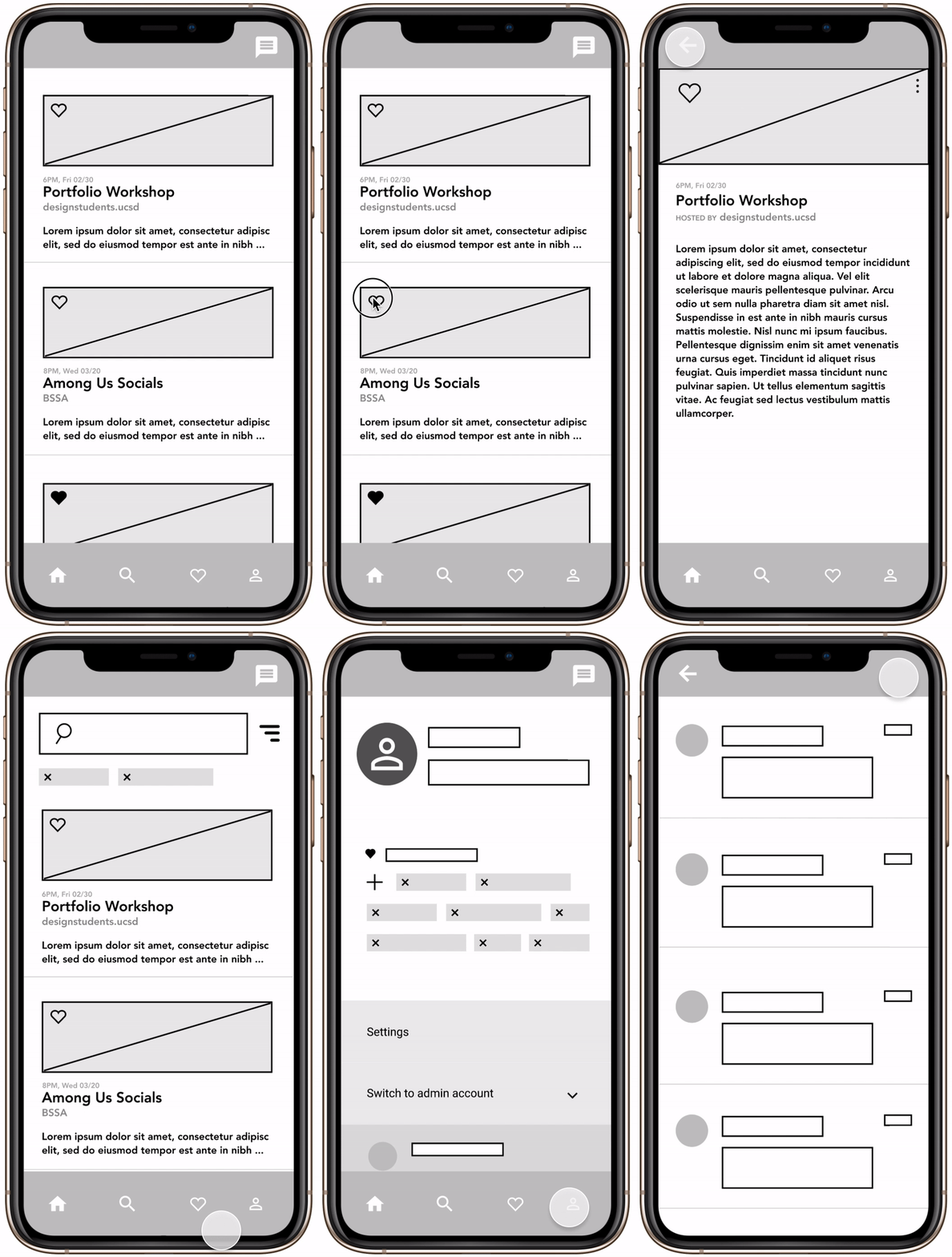
The wireframes based on our sketches to prepare for usability testing:
Findings from user testing —

Lacking connectivity with their friends — Some users wondered if they could see the events their friends were interested. This led to improvements in friends' profiles and forwarding events to people.

Inconsistent use of icons — Users experienced a delay in reaction to some of our icons or even translated them falsely. One example was the messaging icons, which were thought of as a "comment" function.
Design System —

Final Design —
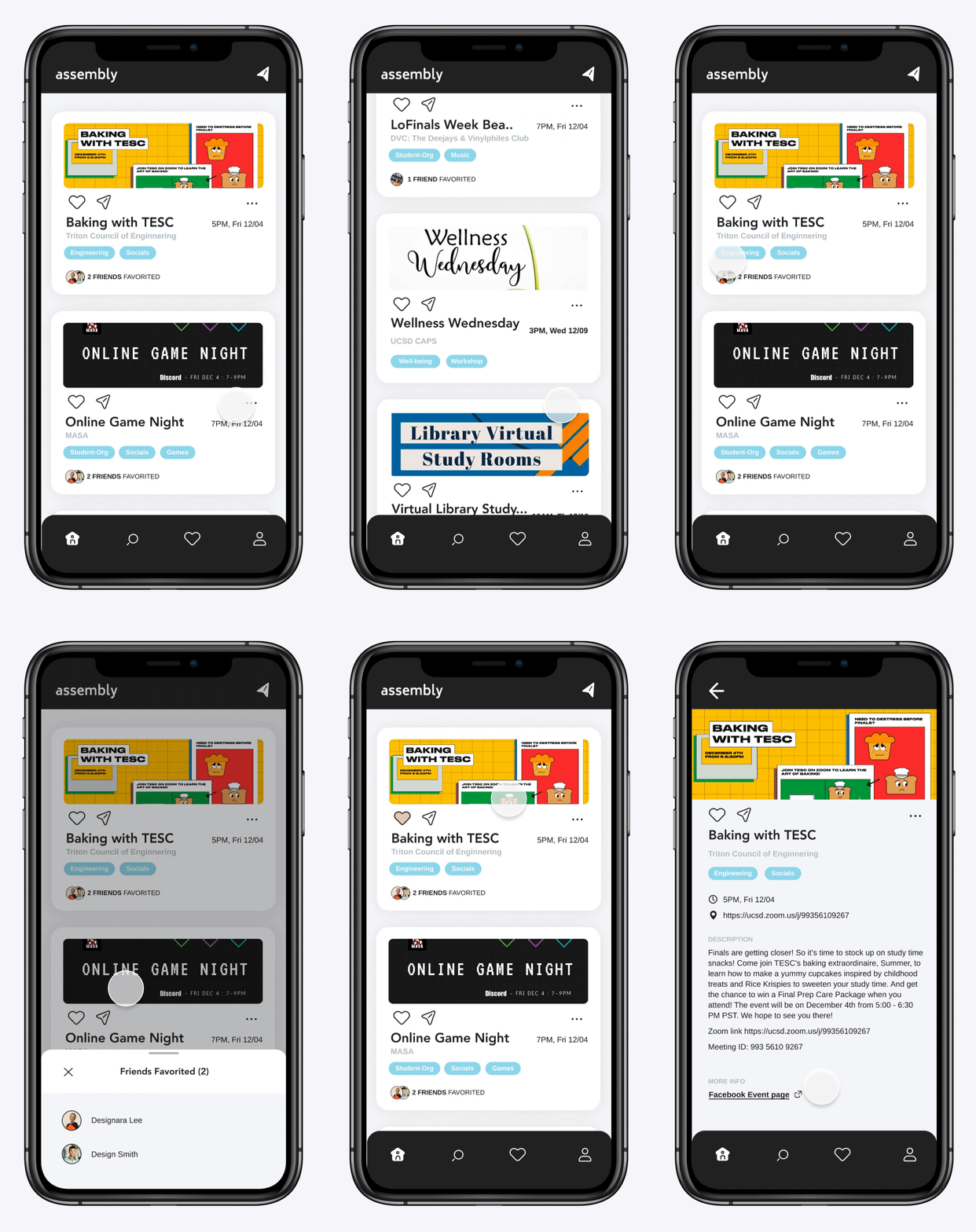
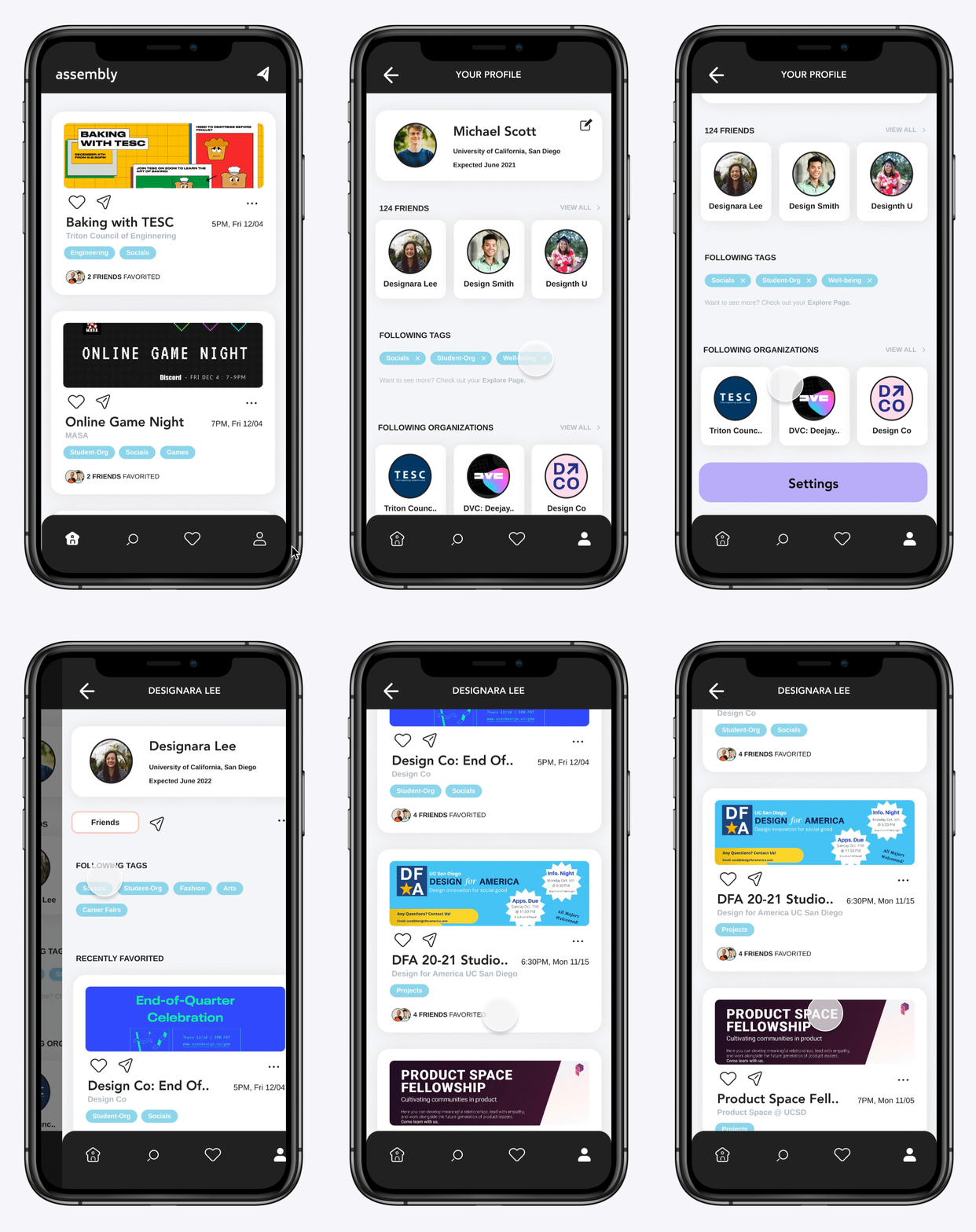
The main feed with personalized events is based on the user's profile.
— The event shows important details about the event, such as time, location, and the friends that favorited.

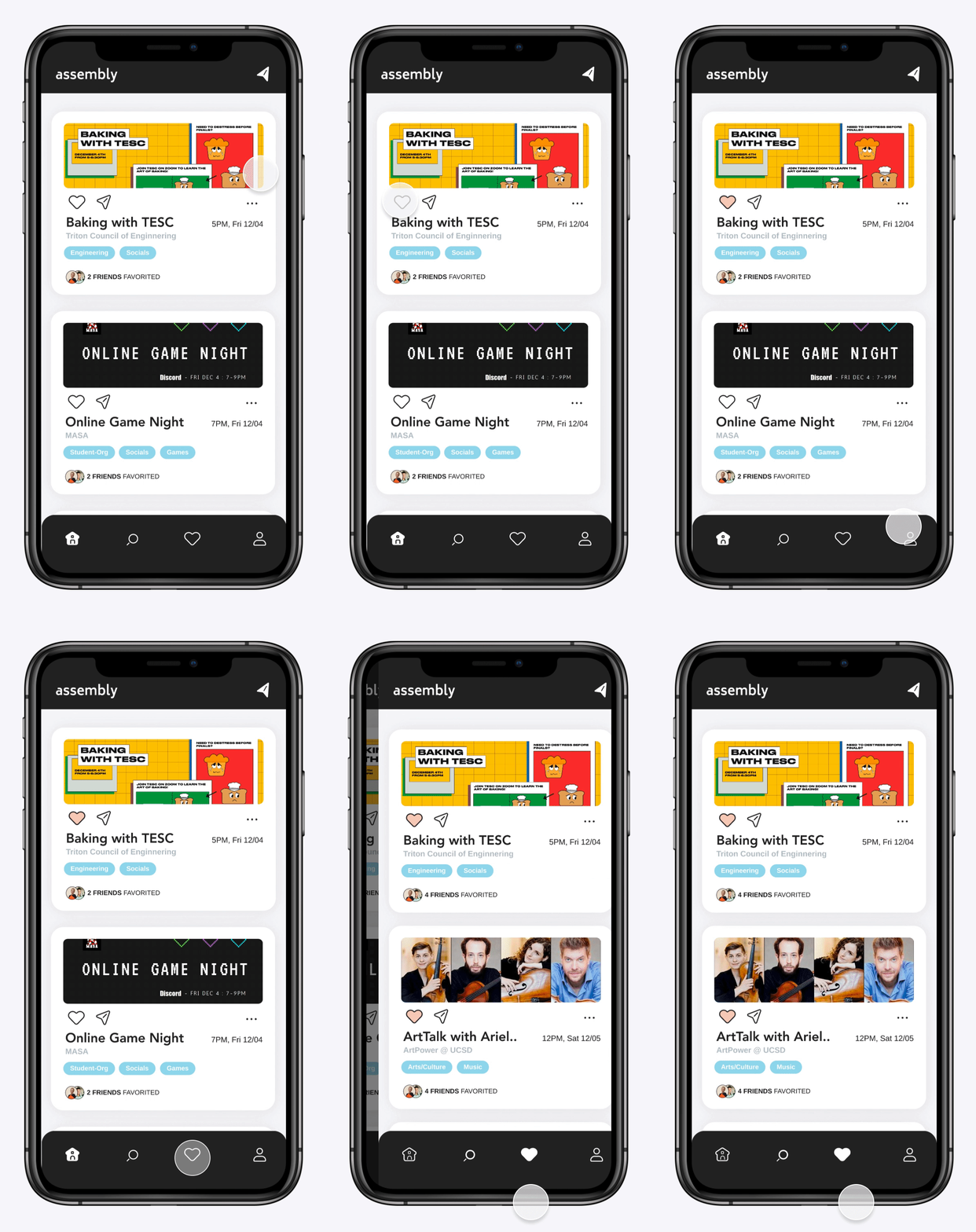
Users can save events they are interested in, which are accessible in the 'Favorite' tab (represented by the heart icon) on the navigation bar.

The user's profile, where they can see their friends list, following organizations, and customize tags for events.
— On their friends' profiles, users can see their followed tags and interested events.
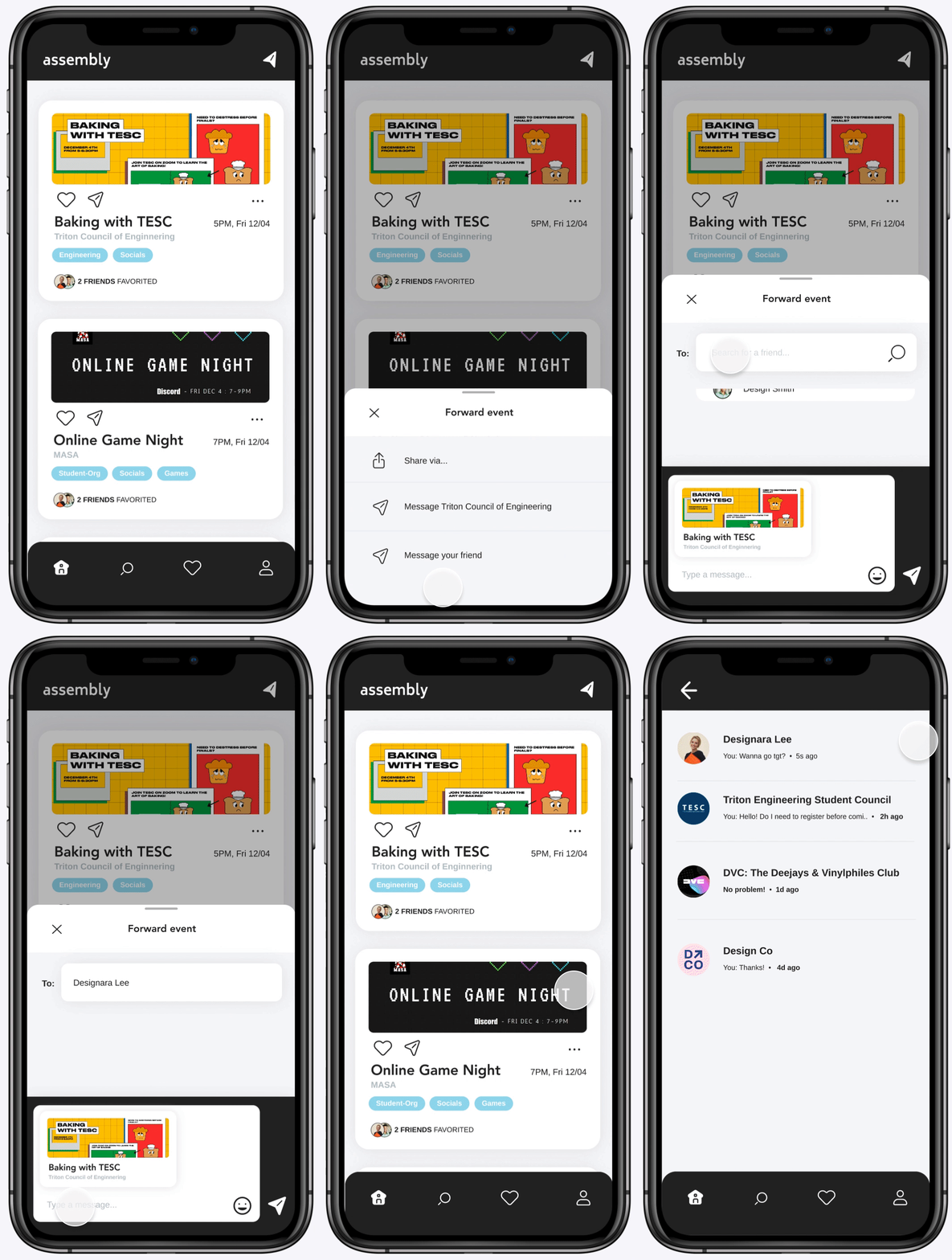
Users can forward an event to their friends right on the app or as an external link.

Takeaways —
— By conducting continuous testings, we managed to get a lot of feedback from users and saved some time on iterations.
— The benefits of process documentation that helps us organize data
Thank you to my amazing team (Ria Thompson, Cole Biehle, and Erica Kuen) for your hard work on this project!
4/ Next steps
We spoke to some of our users for to test the final design and concluded with the following findings as next steps in the project:
— Additional profile customization, such as their own involvements (Eg: as a board member) or social media
— More integration with other software for easy event hosting, such as Zoom
— The administrator view for organizations to manage their profiles and events.